

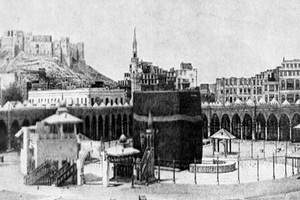
For Muslims embarking on the sacred journey of Umrah, the Kaaba stands as the most revered destination. Many pilgrims today begin their spiritual experience by opting for an Umrah package from Dubai, which offers a range of travel options, including Umrah visa from Dubai, Umrah by bus from Dubai, or even Umrah by air from Dubai. Regardless of the route, the ultimate goal remains the same: to stand in awe before the Kaaba in the holy city of Makkah, a structure that has inspired devotion for millennia. To understand its spiritual significance fully, one must delve into the Kaaba’s rich history and the various phases of its construction throughout time.
The Kaaba, also known as the House of Allah, is a cube-shaped building located in the center of Masjid al-Haram. According to Islamic tradition, it was originally built by the Prophet Ibrahim (Abraham) and his son Ismail (Ishmael) upon divine instruction. Its purpose was to be a place of worship dedicated solely to the one true God. The simplicity of the structure belies the depth of its religious and historical significance. It has stood as a central symbol of monotheism long before the advent of Islam in the 7th century. Over the centuries, the Kaaba has undergone multiple reconstructions, each shaped by the social and political context of its time.
The earliest records of the Kaaba’s construction are rooted in Islamic tradition, which states that the original foundation was laid by angels. The Prophet Ibrahim and his son Ismail were later commanded to rebuild it on the same foundation. During this period, the Kaaba was a simple rectangular structure made of stones without a roof. A key feature, the Black Stone, was placed in one of its corners by Ibrahim himself. Even in those early days, the Kaaba served as a focal point for spiritual gatherings and religious rituals.
Over time, the Kaaba was rebuilt multiple times due to natural wear, floods, and fires. One of the most notable reconstructions took place during the lifetime of Prophet Muhammad, before his prophethood. A dispute had arisen among the Quraysh tribes over who should have the honor of placing the Black Stone during the rebuilding of the Kaaba. It was Prophet Muhammad who proposed a fair solution that maintained tribal unity—he placed the stone himself, supported by the elders of each tribe. This moment reflected not only his wisdom but also the deep-rooted significance of the Kaaba in Arab society even before the spread of Islam.
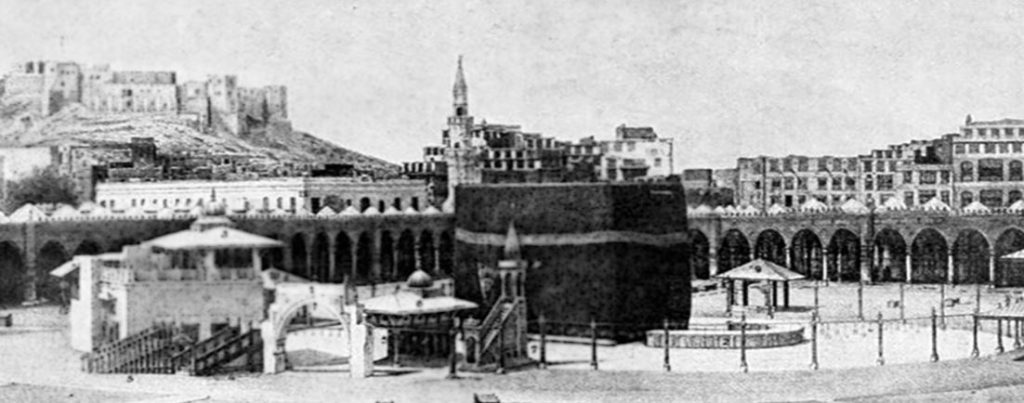
After the Prophet’s mission began, the Kaaba became central to Islamic worship. Initially, Muslims prayed facing Jerusalem, but this direction was later changed to the Kaaba, establishing it as the qibla, or direction of prayer, for all Muslims. This marked a pivotal point in Islamic identity and reinforced the Kaaba’s position at the heart of the faith. As Islam expanded, so did the number of pilgrims traveling to Makkah, emphasizing the need for a larger, more structured space around the Kaaba to accommodate them.
The Umayyad and Abbasid Caliphates contributed significantly to the architecture of Masjid al-Haram and the preservation of the Kaaba. Successive Islamic dynasties undertook renovations and expansions to protect the Kaaba from environmental and human-induced damage. These efforts included adding a roof, strengthening its walls, and replacing damaged stones. The Kaaba we see today is not the exact structure built by Prophet Ibrahim, but it retains the spiritual legacy and orientation set by him and maintained throughout Islamic history.
The Kaaba’s exterior is famously covered in a black cloth known as the Kiswah, which is replaced annually in a ritual that draws international attention. The cloth is embroidered with Quranic verses in gold thread and serves both as a symbol of reverence and a protective layer for the building. Inside, the Kaaba is relatively unadorned, maintaining a sense of spiritual simplicity that mirrors its original design. Only a select few are granted the opportunity to enter its sacred interior, reinforcing the deep sense of sanctity associated with the structure.
In modern times, the pilgrimage to the Kaaba has become more accessible, particularly for residents of the United Arab Emirates. With services like the Umrah package from Dubai, pilgrims can choose various modes of transport to Makkah. Some prefer the affordability and group experience offered by Umrah package by bus from Dubai, while others opt for the speed and comfort of Umrah package by air from Dubai. Regardless of the method chosen, the journey is streamlined through easy access to the Umrah visa from Dubai, making the spiritual trip more feasible for a growing number of worshippers.
The ongoing efforts by the Saudi authorities to expand and modernize the Masjid al-Haram complex have ensured that the Kaaba remains accessible to millions of pilgrims each year. Despite these changes, the Kaaba continues to symbolize the unchanging core of Islamic belief: the worship of one God, unity among Muslims, and a shared history that traces back to the time of the Prophet Ibrahim. Pilgrims from Dubai and across the world arrive with a common intention—to perform rituals that have been observed for centuries and to stand in a place that connects them to their spiritual heritage.
In conclusion, the Kaaba is more than just an architectural structure; it is a spiritual axis that unites Muslims across time and geography. Its construction and evolution tell a story of faith, resilience, and reverence. For those making the journey through an Umrah package from Dubai, whether traveling by bus or air and supported by a convenient Umrah visa from Dubai, the Kaaba is both a destination and a spiritual home—standing timeless at the center of Islam.