

Makkah holds a unique place in the hearts of Muslims around the world. For those performing Umrah, the journey is not only about completing the rituals but also about experiencing the sacred places connected with Islamic history. Ziyaraat, or visiting significant religious and historical sites, can add a meaningful dimension to your stay in the holy city. With a little planning, pilgrims can explore these places respectfully while keeping their primary focus on worship.
Masjid al-Haram
The most important place to visit in Makkah is Masjid al-Haram, home to the Kaaba. Muslims face the Kaaba during their daily prayers, and Umrah pilgrims perform Tawaf around it. The mosque is a vast and impressive complex that can become extremely busy, particularly during peak pilgrimage periods.
Umrah Package from Dubai Sharjah and Ajman
Take time to appreciate the spiritual atmosphere of the Haram rather than rushing through your visit. Pilgrims should also remember that praying, making dua, reciting the Quran, and maintaining good manners are central to their time in Makkah.
Jabal al-Nour and the Cave of Hira
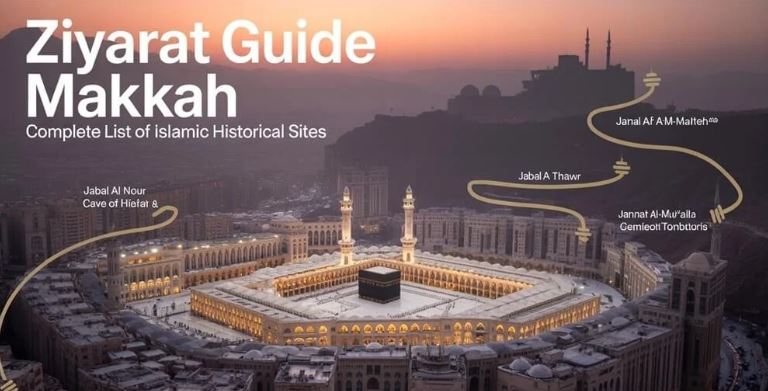
Jabal al-Nour, or the Mountain of Light, is associated with the Cave of Hira. Islamic tradition connects this cave with the beginning of the revelation received by Prophet Muhammad (peace be upon him). The mountain is located outside the central area of Makkah and requires a demanding climb.
Visitors who choose to go should consider their physical condition, the weather, and the difficulty of the terrain. The climb can be particularly challenging in hot conditions. The purpose of visiting is to reflect on the history of revelation rather than simply reaching the summit.
Jabal Thawr and the Cave of Thawr
Another historically significant mountain is Jabal Thawr. The Cave of Thawr is associated with the Prophet Muhammad (peace be upon him) and Abu Bakr (may Allah be pleased with him) during their migration from Makkah to Madinah.
Like Jabal al-Nour, the route can be physically demanding. Elderly pilgrims and anyone with limited mobility may prefer to appreciate the site’s significance without attempting the climb.
Mina, Arafat and Muzdalifah
The areas of Mina, Arafat, and Muzdalifah are closely connected with the annual Hajj pilgrimage. Although Umrah does not involve the same rites performed during Hajj, visiting these locations can help pilgrims understand the broader history and traditions of Islamic pilgrimage.
Umrah Package by Bus from Dubai Sharjah and Ajman
Arafat is particularly significant because it is the location where pilgrims performing Hajj gather for the central day of the pilgrimage. Mina is associated with the tents and the stoning ritual performed during Hajj, while Muzdalifah is traditionally associated with an overnight stay and the collection of pebbles for the stoning ritual.
Masjid Aisha at Tan’im
Masjid Aisha, located in the area of Tan’im, is a well-known place for pilgrims who need to enter into Ihram for another Umrah. It is outside the Haram boundary and is commonly visited by people staying in Makkah who wish to perform an additional Umrah.
If you are considering another Umrah, make sure you understand the relevant Ihram requirements and plan the trip according to your own circumstances.
Tips for a Meaningful Ziyaraat Experience
Ziyaraat should be approached with respect and moderation. Avoid treating sacred and historical locations as ordinary tourist attractions. Dress appropriately, maintain good manners, and be considerate of other pilgrims.
Umrah Package by Air from Dubai Sharjah and Ajman
Plan visits during cooler parts of the day whenever possible, carry water, wear comfortable footwear, and allow enough time for rest. Group tours can make transportation easier, but independent visits may provide more flexibility.
Most importantly, remember that Ziyaraat is secondary to the purpose of your Umrah. Your time in Makkah is an opportunity for worship, reflection, gratitude, and spiritual renewal. Visiting historical places can deepen your appreciation of Islamic history, but the heart of the journey remains your connection with Allah and the acts of worship performed in the holy city.