
Makkah holds a unique place in the hearts of Muslims around the world. It is the city where the Prophet Muhammad ﷺ was born, raised during his early years, and later entrusted with the final revelation. For visitors, learning about the places connected with his life can add historical and spiritual meaning to a journey through the city. Among these locations, the traditional site associated with his birthplace is especially significant.
The Prophet Muhammad ﷺ was born in Makkah in approximately 570 CE, a year traditionally known as the Year of the Elephant. His father, Abdullah ibn Abd al-Muttalib, died before his birth, and his mother, Aminah bint Wahb, cared for him during his earliest years. He belonged to the respected Quraysh tribe and the clan of Banu Hashim.
Umrah Package from Sharjah UAE
The traditional birthplace is associated with a location in Makkah near the area of the Grand Mosque. Historical accounts identify the house of Abdullah, the Prophet’s father, as the place where Muhammad ﷺ was born. Over the centuries, the character of the surrounding area has changed considerably as Makkah developed and expanded.
Today, visitors should understand that the traditional birthplace is not simply a tourist attraction. Its importance comes from its connection with the early life of the Prophet ﷺ and the history of Islam. The site has also undergone changes in its use and appearance over time. Modern visitors may not encounter a preserved seventh-century house or an elaborate historical monument.
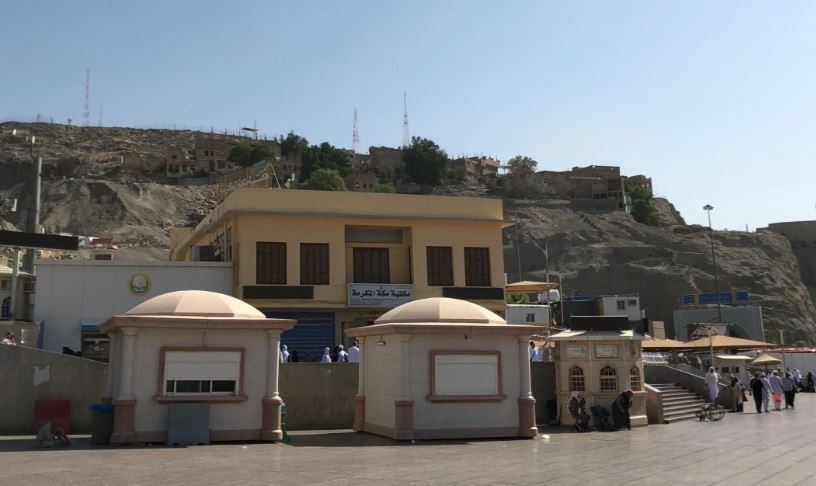
The location has traditionally been identified with the area now associated with the Makkah Library. Visitors should follow current local guidance when approaching the site, as access arrangements and surrounding facilities can change. It is also worth remembering that the Grand Mosque and the sacred rites of Umrah and Hajj remain the central focus of a pilgrimage to Makkah.
Umrah Package By Bus from Sharjah UAE
For those visiting Makkah, preparation can make the experience more meaningful. Reading about the Prophet’s ﷺ childhood, his family, the Quraysh, and the society of pre-Islamic Makkah beforehand can help visitors understand the historical setting. A reliable biography of the Prophet ﷺ can provide context that simply visiting a location cannot.
Visitors should also approach historical sites in Makkah with respect and modesty. The purpose of visiting places associated with the Prophet ﷺ is generally to remember his life, learn from his example, and deepen one’s appreciation of Islamic history. Visitors should avoid treating historical locations as ordinary sightseeing destinations or assuming that every modern landmark has remained unchanged since the Prophet’s ﷺ time.
It is equally important to distinguish between historically documented locations and places identified through later tradition. Some sites connected with early Islamic history have differing historical accounts concerning their exact locations. Keeping this distinction in mind allows visitors to appreciate the traditions surrounding a place without overlooking the complexities of historical evidence.
For many Muslims, standing in the city where the Prophet Muhammad ﷺ was born is an emotionally meaningful experience. Yet the deepest significance of Makkah does not depend on seeing a particular building. It lies in remembering the life, character, patience, worship, and message of the Messenger of Allah ﷺ.
A visit to the traditional birthplace can therefore become an opportunity for reflection rather than simply a stop on an itinerary. By learning the history, respecting the sanctity of Makkah, and keeping the focus on the Prophet’s ﷺ example, visitors can approach this important location with greater understanding and reverence.