

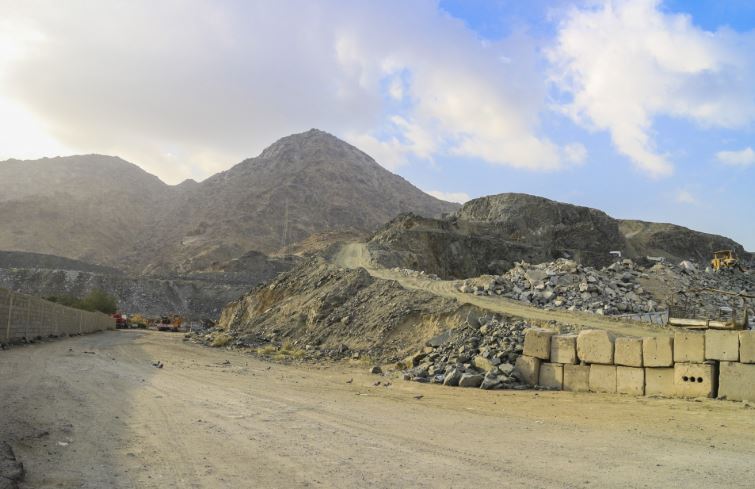
Jabal Thawr is one of the most historically significant mountains in the region of Makkah. Rising to the south of the holy city, this rugged mountain is remembered especially for its connection with one of the most important moments in Islamic history: the migration of Prophet Muhammad ﷺ from Makkah to Madinah. Although the mountain itself is rocky and difficult to climb, its significance comes from the remarkable story that unfolded in its surroundings.
The name Jabal Thawr means “Mount Thawr.” Unlike some of the more familiar landmarks associated with Makkah, it is not located immediately around the Kaaba. Instead, it stands several kilometers south of the city. Its rough slopes and steep terrain give it a striking appearance, making it easy to recognize from a distance.
The mountain is most famous for the cave known as Ghar Thawr, or the Cave of Thawr. According to Islamic tradition, Prophet Muhammad ﷺ and his companion Abu Bakr رضي الله عنه sought refuge in this cave during their journey to Madinah. Their migration, known as the Hijrah, took place at a time when the Prophet ﷺ and his followers faced severe opposition in Makkah.
Before leaving the city, the Prophet ﷺ and Abu Bakr رضي الله عنه went toward Jabal Thawr rather than immediately taking the direct route north. They remained in the cave for a period while people searching for them came close to discovering their hiding place. The experience became an enduring example of courage, trust in Allah, patience, and careful planning.
One of the most moving parts of the story is the conversation between the Prophet ﷺ and Abu Bakr رضي الله عنه when their pursuers were believed to be very close. Abu Bakr was concerned that the searchers might discover them. The Prophet ﷺ reassured him that they were not alone and that Allah was with them. This moment has remained deeply meaningful to Muslims for generations because it reflects complete reliance on Allah during an extremely difficult situation.
Jabal Thawr therefore represents more than a geographical landmark. It is connected to a turning point that changed the course of Islamic history. The Hijrah eventually led to the establishment of the Muslim community in Madinah and became the basis for the Islamic calendar.
Today, visitors to Makkah may see Jabal Thawr from different parts of the surrounding area. Some people also attempt the climb to reach Ghar Thawr. The journey can be physically demanding because the mountain is steep, rocky, and uneven. Those who visit are often struck by the simplicity of the landscape compared with the enormous historical importance attached to it.
For Muslims, remembering Jabal Thawr is ultimately about remembering the lessons associated with the Hijrah. The story teaches that difficult circumstances do not necessarily mean that hope has disappeared. It highlights the importance of patience, thoughtful action, companionship, and faith. It also reminds believers that moments of uncertainty can become part of a much greater story.
Jabal Thawr has stood for centuries as a silent witness to this extraordinary chapter. Its rocks and slopes may appear unchanged, but the story connected to them continues to inspire millions of people. For anyone interested in the history of Islam, Jabal Thawr is not simply a mountain near Makkah. It is a place associated with sacrifice, determination, trust, and one of the defining journeys in Islamic history.