

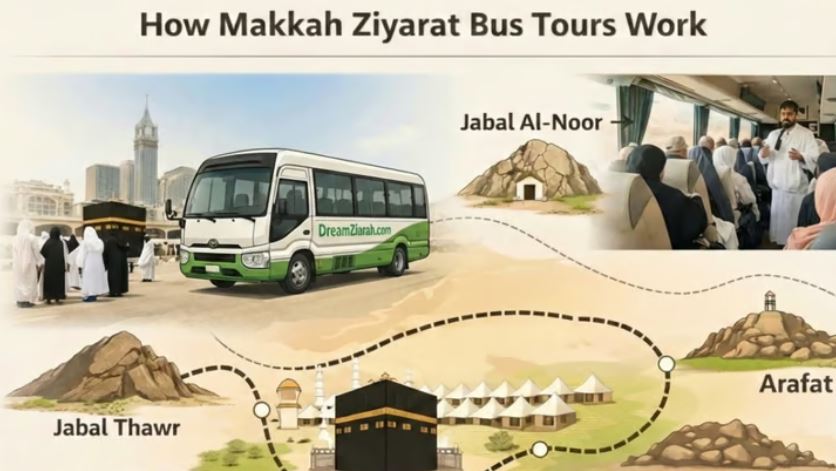
Makkah is much more than a destination for pilgrims. It is a city filled with places connected to the history of Islam, the life of Prophet Muhammad ﷺ, and the generations of Muslims who came before us. For many pilgrims performing Umrah or Hajj, joining a Makkah Ziyaraat by bus is a convenient way to visit several important sites without worrying about transportation, directions, or unfamiliar roads.
A bus-based Ziyaraat usually involves a guided tour of significant religious and historical locations around Makkah. Depending on the tour operator and the time available, the itinerary may include places such as Jabal al-Noor, the Cave of Hira area, Jabal Thawr, Mina, Arafat, Muzdalifah, and other locations associated with the history of the pilgrimage. Not every tour visits the same places, so pilgrims should confirm the itinerary before booking.
One of the main advantages of travelling by bus is convenience. Makkah can become extremely busy, particularly during peak Umrah and Hajj periods. Finding private transportation, navigating crowded streets, and arranging parking can be difficult. A group bus allows pilgrims to travel together and usually provides a planned schedule, making the experience simpler for visitors who are unfamiliar with the city.
Before joining a Ziyaraat tour, pilgrims should check the meeting point carefully. Some buses collect passengers from their hotels, while others operate from a designated gathering location. It is important to arrive early because buses may leave at a fixed time and cannot always wait for late passengers. Keeping the tour operator’s contact information saved on a phone can also be helpful in case the group becomes separated.
Comfort is another important consideration. Makkah can be very hot, especially during the summer months. Pilgrims should carry drinking water, wear comfortable and modest clothing, and take necessary precautions against the heat. Comfortable footwear is particularly useful because some stops may involve walking or uneven ground. Elderly pilgrims and people with limited mobility should ask in advance whether the tour is suitable for their needs.
Pilgrims should also remember that Ziyaraat is primarily an opportunity to learn, reflect, and remember Islamic history. Visiting a historical location does not necessarily mean that a particular ritual is required there. It is useful to follow reliable religious guidance and avoid practices that have no established basis in Islamic teachings.
Photography is another point worth considering. While pilgrims may want to capture memories, they should remain respectful at religious and historical sites. They should avoid blocking pathways, disturbing other visitors, or spending so much time taking photographs that they miss the purpose of the visit.
Food and personal necessities should also be planned ahead. Depending on the tour duration, there may not be enough time for a proper meal between stops. Carrying a small snack, water, necessary medication, and other personal items can make the journey more comfortable.
Finally, pilgrims should choose a Ziyaraat service carefully. Before paying, ask about the total price, transportation arrangements, pickup location, tour duration, sites included, and whether a guide accompanies the group. Clear information beforehand can prevent misunderstandings later.
A Makkah Ziyaraat by bus can be a meaningful part of a pilgrimage when approached with preparation and the right intentions. With a little planning, pilgrims can focus less on transportation and more on appreciating the history, lessons, and spiritual significance of the places they visit.